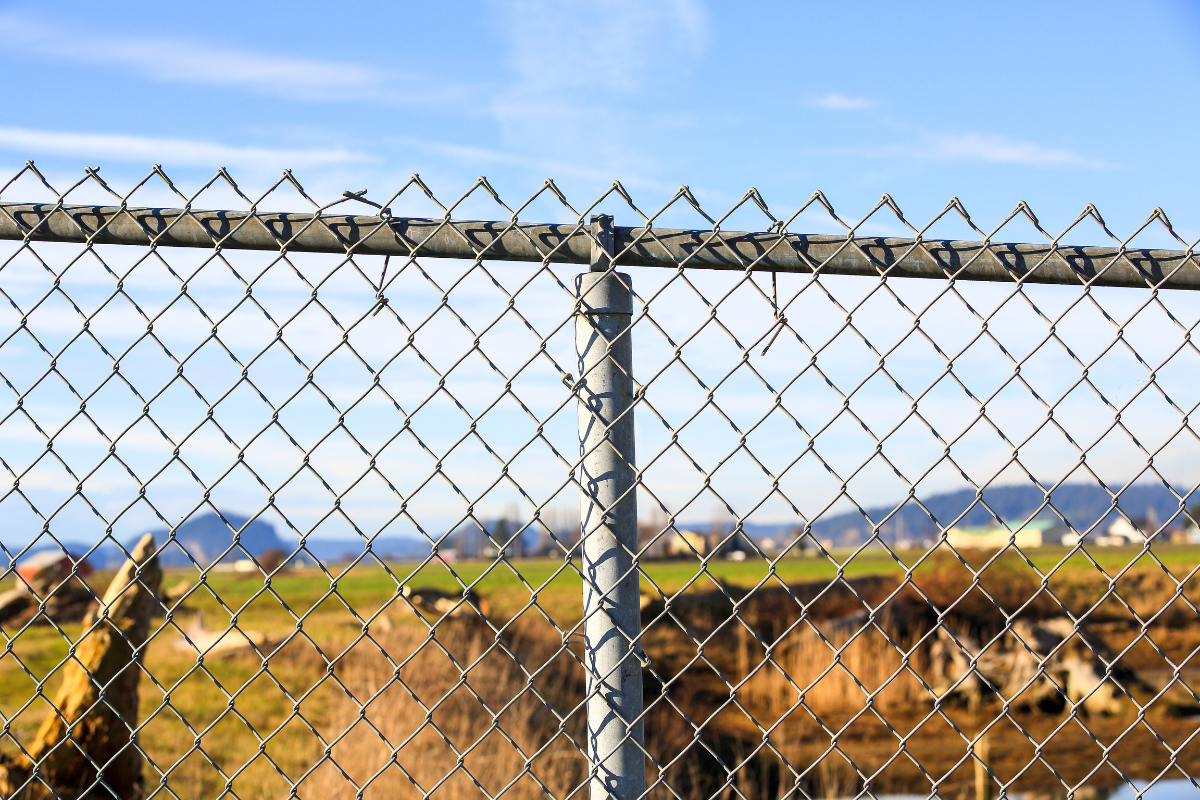
Few products https://maps.app.goo.gl/p3n7oNXBtBFzjn2WA punch above their weight like a well-built chain link fence. It solves security, safety, and boundary needs without drama, holds up to weather and wear, and rarely asks for more than a seasonal checkup. Yet the difference between a fence that lasts twenty years and one that sags in five usually traces back to the company that designed and installed it. A full-service chain link fence company lives in those details, from the first conversation about use and aesthetics to the final gate latch click.
This is a look inside the process, the decisions that actually matter, and the pitfalls you can avoid when you hire a chain link fence contractor. It draws on day-to-day job site experience: soils that turn posts, neighborhoods with tight setbacks, schools with break-away requirements, and commercial yards where a forklift inevitably finds the weakest spot.
Where the project really starts: purpose, people, and place
Every chain link fencing project begins with a use case. Residential backyards read differently than a warehouse perimeter, and both diverge from a municipal ball field or a daycare play yard. Before anyone rolls out a tape measure, a seasoned contractor asks blunt questions. What needs to be kept in, out, or simply demarcated? How will people and vehicles move through the space? Are there site constraints like utilities, stormwater paths, or HOA rules?
On a light industrial job near a riverfront, a client once asked for an 8-foot fence with razor wire. It sounded straightforward until we walked the site and noticed flood marks on the warehouse walls, about knee high. That changed everything. We shifted to galvanized framework with baked-on coatings, adjusted the bottom rail design to accommodate periodic high water, and specified longer terminal posts with concrete collars that shed silt. The “design” part of chain link fencing services is not a luxury, it ensures the fence functions in the realities of the property.
Three baseline considerations anchor that early phase:
- Security profile. Are we deterring casual trespass or delaying determined entry? That choice drives height, fabric gauge, mesh size, and whether to integrate privacy slats, barbed wire, or outriggers. Site conditions. Clay heaves in freeze-thaw cycles, sand collapses during augering, turf slopes dictate stepped or racked panels. Utilities, irrigation lines, and easements shape post layout. Aesthetic and regulatory fit. Residential zones may limit height to 6 feet in rear yards and 4 feet in front. Some cities require black vinyl-coated chain link on street-facing runs. School districts may mandate gap-free bottoms to stop ball loss and small-animal intrusion.
When a chain link fence company front-loads these questions, change orders shrink and the install goes smoother.
Materials that take a beating and keep their shape
Chain link components look simple, yet each carries a job. The chain link fence contractor you choose should walk you through material choices in plain terms. The wrong gauge here, a tinny cap there, and you have a fence that rattles in a breeze. Better components cost more, but the real cost comes from downtime and repairs when corners get cut.
Fabric. Standard residential fabric runs 11 to 11.5 gauge with a 2-inch mesh. Durable commercial setups often move to 9 gauge. For high-security sites, 6 gauge or 3/8-inch mini-mesh makes sense because bolt cutters struggle with smaller openings. Vinyl-coated fabric, usually black or green, adds a layer of UV resistance and a cleaner look, while galvanized fabric shines in heavy-use yards where abrasion is constant.
Framework. Line posts take wind load through the chain link, and top rails share impact load across spans. Light residential frameworks often use 16-gauge tubing for rails and 15-gauge for posts. In commercial and industrial settings, schedule 40 pipe or at least 0.120 wall thickness is common for posts and terminals. Gate frames deserve special attention because the hinge side carries weight and torsion. A sagging gate is usually a sign of undersized hardware or a frame that flexes under daily use.
Fittings. Tension bands, brace bands, and rail ends should match the framework’s grade. Zinc-rich coatings and pressed steel have their place, but not all pressed steel is equal. Cheaper fittings lose their protective coating where they were stamped, and those thin lines show rust soonest. In coastal zones, hot-dipped galvanized or powder-coated fittings with stainless steel fasteners extend life considerably.
Foundations. Concrete decisions make or break a fence. In frost regions, post depths run below frost line, often 36 to 48 inches. In temperate climates with stable soils, 24 to 30 inches may suffice for 6-foot fences. The bell-shaped base technique, where the bottom of the hole is widened with a tamper, resists uplift better than straight cylinders. Around utilities or root zones, no-dig screw piles can be a smart alternative that keeps permit inspectors comfortable.
Design details that separate good from “good enough”
Two fences can look similar on day one and wear completely differently by year three. The difference comes from how the design translates to the field.
Top rail versus top tension wire. A continuous top rail prevents scalloping and gives the fence a straight line, which matters visually in front yards and functionally where kids climb. Tension wire saves cost and can work in short runs out of sight, but it does not control fabric deflection as well. In rough neighborhoods where the fence might be sat on, the rail pays for itself.
Bottom treatment. Leaving fabric off the ground invites animals and erosion to reshape the base. Bottom tension wire discourages push-through, while a bottom rail adds real rigidity. In high-security sites or ball fields where balls roll out, we often turn the fabric down 6 inches and set it in a shallow trench with crushed stone. It resists digging and keeps a crisp line.
Terminals and bracing. Any change of direction or elevation puts stress at endpoints. Proper bracing uses a horizontal rail and a diagonal brace rod from post to rail. On steep slopes, doubles are your friend. Without that, your corner posts lean toward the pull within a season.
Gate placement and width. A 4-foot pedestrian gate sounds fine until you try to get a riding mower through it. In yards, 5 feet feels roomy and makes life easier. For driveways, design actual swing arcs and check grade so the gate clears during winter snow or leaf buildup. Cantilever gates solve clearance issues in tight sites but need space for the counterbalance, something you cannot fake after concrete is set.
Permits, survey stakes, and neighbor peace
Chain link fence installation lives under local codes, and those codes change between cities. A professional company has a checklist keyed to the jurisdiction. Expect utility locates, sometimes paid surveys, and printed permits at the jobsite. On several suburban projects, our crew arrived to find fence lines shifted a foot into a neighbor’s yard based on a homeowner’s guess. Two phone calls and a stakeout later, we saved both parties the headache of moving a finished fence.
Setbacks require care. Street-side fences often must sit a foot or more back from sidewalk edges. Corner lots add sight triangle rules that limit height near intersections. In HOA communities, color and panel style may be dictated. A good contractor anticipates these and brings samples or spec sheets to meetings so approvals go smoother.
On the interpersonal side, notice and courtesy matter. Telling the neighbor when post holes will be drilled avoids sprinklers getting cut and lawns torn up without warning. We keep mats on the truck for that reason, and we cover walkways with plywood when rolling equipment across soft yards. Those small practices protect your relationships as much as the turf.
From layout string to last cap: how a clean install runs
A smooth field day starts with a crew that knows their roles and a foreman who understands the site plan. If you watch closely, the rhythm tells you a lot about the company.
Layout. We string lines at finished height and along grade to visualize runs. That string dictates post alignment. On slopes, we decide whether to step panels or rack the fabric to follow ground contour. Racking looks cleaner on gentle slopes. Stepping works on steeper grades, but it creates triangular gaps under panels that may need fill.
Drilling and setting posts. Hole diameter rises with post diameter. A typical 2 3/8-inch terminal post gets a hole roughly 8 to 10 inches wide. We bell the base, set posts to exact height, and tamp the sides mid-pour to eliminate voids. For vinyl-coated posts, we use non-reactive concrete mixes and protect the coating from scuffs. Where future gate automation is planned, we sleeve conduits before concrete sets. That detail saves trenching later.
Framework build-out. Top rail goes in continuous where possible. At splices, we use heavy-duty couplers and stagger joints so they do not line up with adjacent bays. Braces and diagonal rods go on before fabric, then we check plumb again. Hardware torque matters. Over-tightening strips coatings and weakens threads over time.
Hanging fabric. The roll unfurls along the line with the weave vertical. We “knuckle and twist” correctly at joins so the mesh pattern keeps its rhythm. Tensioning is where many installs fail. We use a come-along and stretcher bar to bring the fabric tight to terminals, then tie to line posts every 12 to 18 inches, closer in high-wind zones. Bottom wire or rail goes on last, followed by caps and check passes for sharp edges. If privacy slats are part of the plan, we install them after the fence passes inspection to avoid trapping debris during clean-up.
Punch list. A good chain link fence company documents the walk-through. Are gates self-closing where required? Do latches meet pool code height? Any scratches on vinyl that need touch-up? We test swing, verify ground clearance, and adjust hinges under load to avoid later sag.
Upgrades that add function without throwing off budget
Chain link is modular. You can start with a solid base and add features that solve real problems rather than inflate cost. The most common upgrades earn their keep.
Privacy and wind. Slats raise the wind load on the fence, sometimes dramatically. If you want privacy, plan for stronger posts and deeper footings. Alternatives include windscreen fabrics on tie clips that can be removed during storms. For small yards, decorative slats or composite inserts soften the look without turning the fence into a sail.
Security. Bottom rails with tension wire, anti-climb mesh, and barbed out-riggers turn a casual barrier into a true deterrent. We also integrate heavy-duty hinges with through-bolts and tamper-resistant nuts. On sites with power, mag-locks and access control turn chain link gates into part of a controlled entry system. Those extras only work if the underlying structure is rigid, which returns to proper post sizing and concrete.
Safety and code. Pool enclosures require self-closing and self-latching gates, latch height at 54 inches or more, and minimal gaps. Daycares often need 4-foot or 6-foot fences with gaps less than 4 inches at grade. Baseball backstops use 1-inch mesh near the batter box. A seasoned contractor knows these specs by memory and designs to them rather than trying to retrofit after inspection.
The right repair at the right time
Even with the best install, life happens. A delivery truck cuts a corner and crunches a terminal. A storm slams debris against the fabric. Chain link fence repair is pragmatic work that prolongs the life of the system.
For bent top rail, we cut out the damaged section and use full-length replacement rather than stacking couplers every few feet. That keeps the line true. Torn fabric gets a patch woven in with a matching gauge and weave, then tensioned to avoid puckers. When posts move due to frost heave, we assess whether to re-seat the same post with deeper footing or upsize to a heavier wall. In yards with repeated gate sag, we spread the load with longer hinge plates or switch to self-aligning hinges that take the guesswork out of alignment.
A small repair can signal a larger issue. If we see rust bleeds at multiple fittings on a vinyl-coated system, it is a clue that the base metal was low grade or the coating was breached during install. In those cases, we map the worst offenders and replace fittings in clusters, not just one at a time. That approach is cheaper than a cycle of repeated calls.
Real-world pricing, timelines, and what drives both
People often ask for a square-foot price. It is a starting point, not a final answer. A straight 100-foot run across open lawn with a single 4-foot gate might fall in a wide residential range, say 20 to 35 dollars per linear foot for galvanized 6-foot fencing, depending on region and material grade. Add vinyl coating, multiple gates, slats, or tricky terrain, and the number moves. Commercial work with heavier pipe and deeper footings can double that range.
Lead times swing with season and supply. Spring and early summer book quickly. If we can lock material orders early, we beat price bumps and avoid mid-project substitutions. On modest residential jobs, a two to four week window from contract to fence is common in the off season, longer when backlogs grow. Industrial perimeters that run hundreds or thousands of feet stretch to multiple phases, often scheduled around other site work to avoid conflicts with paving or utility crews.
The most important cost control still lives in design. Clear plans reduce idle time. On a cold week, pouring concrete early in the day with insulated blankets on hand keeps the timeline intact. On a hot week, we plan shade and hydration for the crew so the last posts stand as plumb as the first.
Selecting a chain link fence contractor without guesswork
The market has plenty of options. A polished website is not proof of good field practice. You can test a chain link fence company with a few practical questions and observations.
- Ask about post depth and diameter for your fence height, and why. You want a specific answer keyed to soil and frost, not a vague “standard depth.” Request material cut sheets for fabric gauge, mesh size, and framework wall thickness. Make sure what is quoted matches what appears on the truck. Clarify gate hardware. If the plan includes self-closing gates, how will they achieve reliable close rates with seasonal movement? Look for adjustable hinges and mention of shims or brackets, not just a spring. Discuss finish. If you choose vinyl-coated components, confirm that fittings are matched, not mixed with bare galvanized where they will touch. Dissimilar metals and dissimilar coatings behave badly over time. Get a schedule that accounts for inspections and weather. A company that buffers time for curing, locates, and approval steps is less likely to squeeze your install into corners.
Watch how the estimator treats your yard. If they sight down fence lines, mark potential obstructions, and talk through gate swing with you standing in the path, you likely have someone who will translate design notes into field practice.
Maintenance that actually matters, and what you can skip
Chain link asks for little. A simple routine will keep it solid and sharp for years.
Walk your fence line twice a year, ideally after the harshest seasons. Check for loose ties, rattling rails, or posts that moved. Lightly oil gate hinges and latches, wipe off grit, and test auto-closures. Where the lawn meets the fence, avoid building soil or mulch against fabric, especially on vinyl-coated systems. Trapped moisture speeds corrosion on cut ends and fittings. If you use string trimmers, keep them off the posts. Repeated strikes strip coating and create the first rust spots.
You can skip repainting galvanized components. If you see oxidized dullness, that is the zinc doing its job. If aesthetics matter, vinyl-coated systems maintain their color with minimal effort. For privacy slats, rinse them a couple of times a year to prevent dust buildup that traps moisture. In high-wind zones, remove temporary windscreens ahead of storms to reduce load.
When chain link outperforms alternatives
There are times when wood, vinyl, or ornamental steel fits better. But chain link shines in several lanes that matter.
Large perimeters. Cost per foot stays reasonable as the length increases. The modular nature reduces waste and speeds installation around irregular parcels.
Athletic fields and parks. Resilience to ball impact, the ability to see through, and compatibility with backstops, foul poles, and dugout screens make chain link the default. Coated systems in black recede visually and photograph well during events.
Industrial yards. Forklifts kiss fences. Trucks brush them. Pallets lean against them. Chain link takes abuse, and when it does give, a chain link fence repair is quick, targeted, and affordable. You replace a panel or a post, not an entire section of custom iron.
Security integration. Cameras need sight lines. Access control needs predictable geometry. Chain link supports both without blocking visibility for patrols. Mini-mesh fabrics and outriggers elevate protection without losing sight lines.
Case notes from the field
A school district requested 6-foot black vinyl-coated chain link around three elementary playgrounds, with self-closing gates and panic egress at specific points. During the site walk, we noticed maintenance access points that doubled as snow removal routes. A simple 4-foot gate would have trapped snow equipment outside the fenced area each winter. We incorporated two 8-foot double-swing gates with lock boxes that maintenance could open, and we adjusted hinge placement so the leaves cleared accumulated snow berms. Those gates saved the district operational headaches every winter with no calls for adjustments.
On a distribution yard, repeat impacts at one corner destroyed a short run of fence twice in a month. Instead of repeating the same repair, we installed schedule 40 terminal posts, a bottom rail with sleeve joints, and a heavy bollard line set just inside the fence at forklift bumper height. The fence stayed straight, and the operator retraining stuck once the bollards introduced a consequence before the fence did.
A homeowner wanted privacy slats on a windy lakefront lot. We recommended changing from 2-inch mesh to 1 3/4-inch mesh to support the slats better and upsizing line posts from 2 inches to 2 1/2 inches, with deeper footings. During a storm that took down a neighbor’s wood fence, that chain link stood. The added upfront cost prevented a full replacement later.
What a full-service partner looks like after the install
A fence company earns its reputation long after the truck leaves. Warranty support is only part of it. When you call about a stubborn latch six months later, does someone show up with the right wrench and a spare? When a new irrigation line goes in, will the crew drop by to reset a post you had to temporarily pull? Relationships matter. Our most durable fences sit on properties where the owner lets us know when something changes on site. We respond with quick service and documentation so the next facilities manager inherits a clear picture.
A full-service chain link fence company also keeps records. As-builts mark post spacing, gate sizes, and locations of conduits, which helps when you add access control or lighting later. Material records make replacements seamless. If a distributor discontinues a specific slat style, we know the closest match before we order a box.
Bringing it all together
Chain link fencing still wins on value, longevity, and flexibility. But the story is not about rolls of wire and stacks of pipe. It is about people who understand sites, compute loads without drama, and care enough to set posts right when nobody is watching. If you are choosing among chain link fencing services, judge the company less by their brochure and more by how they talk through your use case, soil, wind, and daily life around the fence. That is where the difference lives.
Whether you need a small backyard enclosure or a secure perimeter around a complex facility, look for a chain link fence contractor who treats design as seriously as installation, who brings repair know-how to the first meeting, and who offers clear, documented choices on materials. The result is a fence that stands straight through seasons, opens and closes without fuss, and protects what you care about for years without becoming another maintenance headache.
Southern Prestige
Address: 120 Mardi Gras Rd, Carencro, LA 70520
Phone: (337) 322-4261
Website: https://www.southernprestigefence.com/