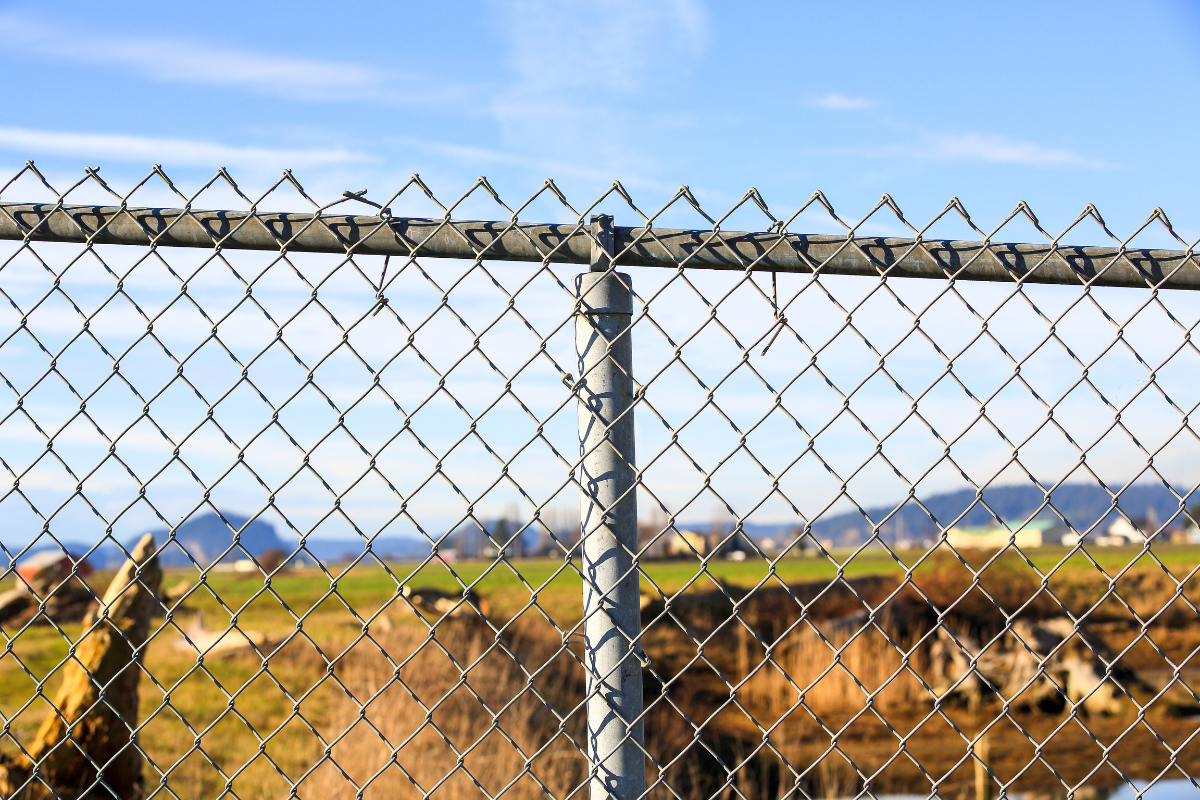
Some jobs look simple until you start measuring slopes, marking setbacks, and figuring out how a driveway gate is going to swing without clipping a bumper or drifting out of square. Chain link fencing earns its reputation for value and longevity, but the difference between a fence that quietly does its job for twenty years and one that sags after two often comes down to planning and craftsmanship. A chain link fence company that specializes in custom gates brings both to the table: practical design, field-tested hardware choices, and clean installation that respects the way people and vehicles actually move through a property.
This guide walks through the decisions that matter, from mesh gauges and post depths to hinge geometry and automation. If you manage facilities, own rental properties, or simply want a secure backyard that won’t fight you every time you roll a lawnmower through, you’ll recognize the trade-offs and hard lessons that shape a good build.
Why chain link remains a smart choice
Chain link finds its way onto school grounds, equipment yards, public parks, and suburban side lots for good reasons. It is transparent to sightlines, which deters trespassers more effectively than a hidden corner behind solid panels. It adapts to uneven grades without fussy carpentry. It tolerates weather swings, sprinkler overspray, and the occasional soccer ball. When specified correctly, it outlasts wood and many low-cost composites, and it does so with less maintenance than most alternatives.
The raw material tells the story. Galvanized steel mesh comes in different weights, but even a mid-grade 9-gauge mesh with a Class 2 zinc coating stands up to years of exposure. Aluminized mesh costs more, yet resists corrosion where de-icing salts and coastal air punish bare zinc. Vinyl-coated chain link adds a protective polymer jacket, improves appearance with color, and quiets the rattle of impact a bit. None of that matters, though, if the posts are shallow, the fabric tension is limp, or the gate frame twists under its own weight. The best chain link fencing services start with the right spec for the environment, then build in the small details that keep the system tight.
Where gates make or break the design
Every fence funnels traffic to a point, and how that point functions shapes daily experience. For a homeowner, it might mean wrestling groceries through a narrow walk gate while the latch catches on a coat sleeve. For a facility manager, it might mean a truck waiting in the street because an undersized swing gate blocks the apron when open. A chain link fence contractor who specializes in custom gates learns to anticipate those bottlenecks.
Start with width. A typical walk gate runs 36 inches, which suits a person and a wheelbarrow. But if you mow with a 54-inch deck, that gate becomes a headache. I often steer clients toward 48-inch walk gates on side yards, or a double-swing pair that opens to 72 inches where equipment needs to roll through occasionally. For vehicles, a single-swing gate wider than 12 feet begins to sag unless it carries a diagonal brace and a wheel. Past 16 feet, a cantilever slider or a biparting swing pair makes more sense, both structurally and operationally.
Consider swing direction and clearance. Gates should open into the secure side when practical to avoid swinging into public sidewalks or lanes. A sloped driveway complicates that, since a downward slope inside the property can force the gate to open outward to avoid scraping. On steeper grades, a slider solves the problem altogether because it rides parallel to the fence line. A chain link fence company fluent in these permutations will sketch the movement arcs on site, not just on paper.
Hardware selection completes the puzzle. Heavy barrel hinges with grease fittings outlast stamped strap hinges. A latching system with a lock box deters prying, and if the gate will be used by delivery drivers, an accessible keypad or card reader location matters more than window-dressing like decorative finials. Good hardware feels boring in the best way: quiet, square, and secure.
What a thorough site evaluation actually checks
Drive by estimates and satellite measurements have a place, but they miss the things that add days to a project. I carry a slope gauge, a soil probe, and a roll of marking paint for a reason. Soil type dictates post depth and backfill approach. In sandy loam, a standard 10-inch auger hole with bell-shaped footing at the bottom keeps posts from heaving. In expansive clay, I prefer deeper footings and pea gravel under the concrete to help drainage. If I hit caliche or a shallow rock shelf, it changes the crew’s tooling and the schedule.
Underground utilities deserve more than an 811 ticket. Main lines get marked, yet private lines to a detached garage or irrigation solenoids often do not. A conscientious chain link fence company will trace those runs with a locator or at least test-dig along the fence path near valve boxes and cleanouts. This prevents the kind of last-minute reroute that creates awkward inside corners.
Property boundaries should be verified, not assumed. If a client lacks a recent survey, we look for pins and monuments, then offset the fence a few inches inside the presumed line to avoid disputes. Corner set-backs from municipal codes and HOA guidelines can also alter gate positioning. A 6-foot fence may be legal, yet a 6-foot gate visible from the street might not be, and that is better resolved before holes are dug.
Specifying posts, rails, and mesh that match the duty
Chain link fence installation lives or dies by the skeleton. Posts carry the load, rails stiffen spans, and tension elements keep the fabric tight. Here is how decisions stack up in practice.
Line posts versus terminal posts: Line posts handle vertical support. Terminal posts at corners, ends, and gate openings take the lateral forces of stretched fabric and daily use. Going up one pipe size on terminals is cheap insurance. A run with 2-inch line posts may call for 2 1/2-inch terminals, and a gate post often benefits from 3-inch diameter or even a 4-inch schedule 40 on wide gates. I have never regretted oversizing a gate post.
Wall thickness matters as much as diameter. Many big-box kits use light wall tubing that looks fine the first season, then creases at ground level after one winter freeze-thaw cycle. Commercial-grade schedule 40 or SS20 framework costs more at the purchase order stage, but it saves replacement work down the line. For coastal zones, I lean into powder-coated rails and hot-dip galvanized fittings after fabrication, not before cutting, which seals the raw edges.
Top rail or tension wire? A full top rail gives a cleaner line and resists deformation when someone climbs or leans a ladder. Tension wire is the budget-friendly option for long rural runs, but it will telegraph waves if the posts are not perfectly aligned. I recommend a top rail in residential and light commercial settings, and both a top rail and a bottom tension wire in high-traffic areas to discourage dogs or intruders from pushing the fabric out.
Mesh gauge and coating: Residential projects do well with 9-gauge galvanized or 8-gauge vinyl-coated mesh in 2-inch diamond. Around pools or sports courts, we often specify smaller diamonds, 1 3/4 inches, to reduce footholds and ball snagging. For high-security sites, 6-gauge mesh with welded barbs is not uncommon, but that becomes a different conversation with liability and code.
Tensioning hardware: This is where chain link fencing services separate the smooth from the sloppy. Properly placed tension bands, one per foot of height at the terminal posts, and a robust tension bar ensure an even pull. A come-along with a stretcher bar spreads that force across the fabric rather than yanking on a single tie. Crew technique matters: a consistent drum-tight ping without over-stressing the wire.
Building gates that stay square
A gate is a frame resisting racking forces. Every time it opens, gravity tries to twist it into a parallelogram. The frame design and hinge spacing fight that battle.
Rectangular frames with welded corners hold shape better than pressed or clamped corners. If welding on site, we prime and coat the welds immediately to seal the zinc break. A diagonal brace from the latch-side bottom to the hinge-side top resists sag, and for wider openings, a truss rod with a turnbuckle allows field adjustment. I like to position upper and lower hinges as far apart as the frame allows, then add a mid-hinge on tall or heavily used gates to distribute load.
Hinge line and latch alignment call for patience. We dry-fit the gate in the opening with temporary shims to establish a 3/8 to 1/2 inch consistent gap. On sloped ground, we plan for swing clearance at the low point, which might mean raising the latch-side pickets slightly or choosing a wheel that carries weight without telegraphing every sidewalk crack to the frame.
For double-swing gates, drop rods keep the idle leaf anchored. The keeper sleeve should be embedded in concrete, not just punched into soil, or the first rain turns the socket into a mud cup. On windy sites, we often add a mag-lock tied to a keypad and a closers’ soft stop to prevent slamming. Nothing bends a gate faster than repeated gusts catching a broad panel mid-swing.
Cantilever sliders and track systems
Sliding gates sidestep slope and clearance constraints. A cantilever gate floats the opening leaf between pairs of rollers mounted to support posts, with a counterbalance section extending beyond the opening. The rule of thumb is simple: the overall gate length should be at least 1.5 times the clear opening, sometimes closer to 1.7, so the support rollers carry the load in both open and closed positions. Skimp on that counterbalance and the gate will nose-dive.
Roller hardware and post foundations do the heavy lifting. We set support posts deeper and larger than standard terminals, often 12 to 16 inches in diameter footings at 42 inches or more, depending on frost lines. For industrial yards, I spec sealed-bearing rollers and steel receiver posts with catch brackets that prevent bounce-back. Track sliders, where the leaf rolls on a ground track, can work on level concrete, but they trap debris and snow, so I tend to avoid them except in mild climates with regular sweeping.
Automation layers on another set of choices. Operator units should be sized by gate weight and duty cycle, not just width. Battery backups and simple loop detectors keep things flowing during brownouts and prevent a gate from closing on a bumper. We always test obstruction sensing with something more fragile than a bumper to verify sensitivity. Good automation feels uneventful, which means it has been adjusted methodically.
Finishes, privacy, and aesthetics that hold up
A chain link fence company that does a lot of custom gates knows the job is part function, part fit with its surroundings. Vinyl-coated mesh in black or dark green recedes visually. When paired with black powder-coated framework and fittings, it reads as a shadow line rather than a bright metallic grid. In neighborhoods with HOA oversight, this often eases approvals.
Privacy slats and screens change wind loading. A slatted 6-foot fence can catch as much wind as a solid panel. That translates to higher lateral stress on posts and rails. If privacy is non-negotiable, we step up the post size, footing depth, and sometimes reduce panel width with mid-rails. We also choose slats made from UV-stable polymers rated for the local sun. Cheap slats chalk and curl in a few seasons, and removal is a chore no one enjoys.
For gates, privacy inserts add weight. Before sliding a box of slats into a 12-foot leaf, we confirm the hinge rating or the motor’s torque margin on an automated system. I have seen brand-new openers go into thermal protection on hot days because the added sail effect turned a routine close into a fight against a crosswind.
The installation day, step by step, without drama
A clean chain link fence installation starts long before concrete mixes. We stage materials to match the run order, assemble gate frames on sawhorses, and keep hardware organized by opening. For residential projects, a typical sequence looks like this: layout with string lines and stakes, post hole excavation and setting terminals first with concrete, then line posts with a jig to maintain plane and height. We let terminals cure to at least initial set before pulling fabric. This small pause keeps corners from shifting under tension.
Pulling fabric requires rhythm. Two installers can roll out a 50-foot length, hook a tension bar at a terminal, then attach a stretcher bar to the come-along. We pull until the diamonds compress slightly yet remain visually even. Over-pulling thins the wire and invites stretch-back. Ties go on every other diamond at the top rail and every foot down the post, with extra ties near gates and corners where abuse happens.
Gates go last so we can align latch heights with adjacent panels. We dry-fit hardware, mark hinge locations precisely, then drill and set carriage bolts with thread-lock. Latches should engage positively without slamming. If a latch requires a shove, we adjust the hinge line rather than telling the client it will wear in. That kind of honesty pays off in fewer callbacks.
Chain link fence repair that actually lasts
Repairs vary from quick fixes to surgical rebuilds. A bent top rail from a fallen limb can be spliced with a swaged sleeve and a new section of rail. Torn fabric can be patched by weaving in a replacement strand, though if the tear runs more than a few diamonds across, a faster and stronger method is to remove a vertical section and replace it with a new panel and a tension bar.
Sagging gates usually come from hinge slip or frame racking. If the hinges are the culprit, we reset them with larger through-bolts or replace with weld-on barrels where appropriate. If the frame is out of square, a truss rod retrofit with a turnbuckle can pull it back, but if the tubing is creased, replacement is the honest answer. On automated sliders, we check roller wear and track alignment first, then test the operator’s amperage draw to catch motor fatigue before it fails.
Chain link fence repair also involves soil correction. Posts that heaved in frost tend to reveal shallow footings or trapped water. We excavate to full depth, bell the bottom of the hole, add drainage gravel, and re-set with fresh concrete isolated from the post by a sleeve in expansive soils. Cutting corners here guarantees a repeat call in a year.
Working with a chain link fence contractor, start to finish
Selecting a contractor goes beyond price-per-foot. Assess how they spec materials, the precision of their layout, and how they handle the gate design. Ask where they plan to locate the hinges and why, what post sizes they recommend for your spans, and how they will resolve grade changes. A contractor who gives clear, site-specific answers has probably solved the same problems on other jobs.
Coordination matters. For commercial sites, we often phase work to keep access open. That can mean temporarily fencing a portion of the perimeter while we install a new cantilever gate, then switching traffic flow for a day while concrete cures. It takes more mobilization and planning, but it minimizes disruption. For residential clients with pets, we stage panels so that the yard is never fully open overnight.
Insurance and permitting are not paperwork formalities. A legitimate chain link fence company carries general liability and workers’ compensation, pulls permits when required, and knows local pool enclosure rules, barbed wire restrictions, https://zaneorgn049.lowescouponn.com/local-chain-link-fencing-services-with-fast-turnaround and sight triangle requirements at driveways. These rules vary by jurisdiction. A professional will explain them up front, not after an inspector red-tags a gate latch for being two inches too low.
Cost ranges and where the money goes
People ask for a number, and the honest answer is a range shaped by material, height, terrain, and gate complexity. As a rough guide in many regions, straightforward residential chain link fence installation with 4 to 6-foot galvanized mesh might land around the low to mid-twenties per linear foot, whereas vinyl-coated systems often push into the thirties. Custom gates change the math. A simple 4-foot walk gate may add a few hundred dollars, while a 12-foot cantilever slider with automation, safety loops, and access control can land in the mid four figures or higher depending on duty rating.
Where does the money go? Framework thickness and coating significantly affect cost and longevity. Deeper footings and larger posts look invisible after backfill, but they carry a fence through storms and decades. Skilled labor shows in tight fabric and square gates, and it reduces long-term maintenance. Automation adds both hardware and electrical work, including trenching for power and conduit for sensors. An experienced chain link fence contractor will put those choices in front of you, explain the impact, and help you prioritize based on how the site will be used.
Maintenance that protects your investment
Chain link is forgiving, yet a small amount of attention stretches its lifespan. A spring and fall walk-through pays off. Look for loose ties along high-traffic sections and tighten or replace them. Test gate swing for smooth motion and check that latches catch without force. If you have a slider, clear debris from roller paths and ensure vegetation stays back from the counterbalance area. After heavy wind events, verify that posts remain plumb and that tension has not relaxed. A fabric that loses its tightness should be re-tensioned before it develops waves that never quite come out.
For vinyl-coated systems, avoid weed trimmer contact with the bottom edge. The line can score the coating over time, exposing steel and creating a rust line. In coastal or high-salt areas, a gentle fresh-water rinse a few times a year helps prevent buildup on hardware. On automated gates, schedule an annual service to check limit switches, battery health, and obstruction sensitivity. These are small tasks compared to the headache of a stuck gate during a delivery window or school dismissal.
Where custom really pays off
Customization is not about flashy scrollwork on a utilitarian system. It is about dialing the fence and gate to the patterns of life on the property. At a small warehouse we serviced, delivery trucks arrived before dawn, and the original swing pair forced drivers to stop in the street while the gates arced open. Replacing that with a cantilever slider that cleared the apron, adding a loop detector that started the opening as trucks approached, and relocating the keypad to a comfortable reach from a cab saved minutes on each arrival and reduced near-misses. The steel looked like any other chain link from the sidewalk, yet the experience changed entirely.
In a backyard with an energetic dog and a slope toward the house, a standard 36-inch walk gate made mowing awkward. We widened the opening to 48 inches, adjusted the grade slightly at the hinge line, and installed a self-closing hinge with a soft close so the gate did not slam when the wind picked up. It is a modest tweak, but after a season the owner said it felt like a new yard because he stopped planning chores around an annoying gate.
Those outcomes come from watching how spaces are used and building accordingly. A specialist in custom gates brings that lens to chain link fencing as a whole, whether the job calls for a hundred feet and a walk gate or a thousand feet with multiple controlled entries.
Final thoughts from the field
Chain link rewards sensible choices. The material is honest, the engineering straightforward, and the performance dependable when installed with care. If you are comparing proposals, look past the lineal foot totals and into the details: post sizes at gates and corners, mesh gauge and coating, hinge type, latch style, and footing depth. Ask the contractor to talk through gate movements on grade and to show how they will tension fabric. Their answers will reveal whether the fence will not only stand straight on day one, but also swing easily on day 3,000.
A fence should fade into the background of daily life. When a chain link fence company gets the custom gate right, that is exactly what happens. You get reliable security, clean lines, and access that works with you rather than against you, season after season.
Southern Prestige
Address: 120 Mardi Gras Rd, Carencro, LA 70520
Phone: (337) 322-4261
Website: https://www.southernprestigefence.com/